Home / What to see
in Bitonto.
EXPLORE BITONTO
What to see
in Bitonto.
Eight stops to discover the city through its architecture, art and music.
01Apulian Romanesque
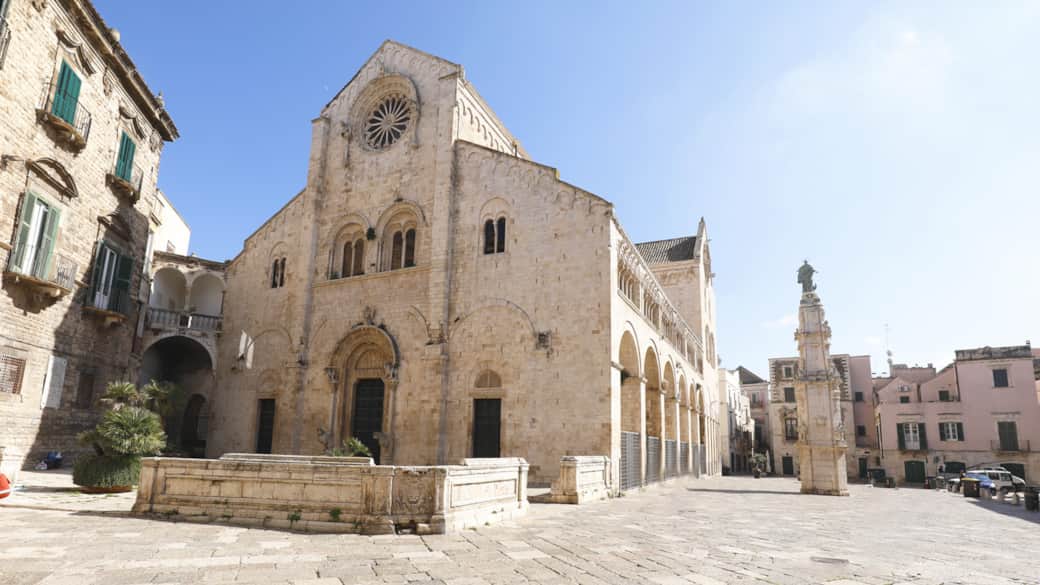
Cathedral of Santa Maria Assunta
Start here to discover medieval Bitonto. Look at the rose window and carved entrance, then explore the three naves and the ambo signed by Nicolaus in 1229.
Below the church, the crypt with thirty columns and the archaeological level with its griffin mosaic reveal earlier chapters of the city’s history.
02The fortified city
Torrione Angioino and Porta Baresana
Built in the late 14th century to defend Porta Baresana, this imposing cylindrical tower is a distinctive reminder of the old city walls. Stop to take in its structure and battlements.
03Painting and collecting
G. e R. Devanna National Gallery
Founded around the Devanna siblings’ donation, the collection brings together Italian and international painting. Its paintings, drawings and preparatory studies make this a rewarding stop for an unhurried encounter with art.
04Music and architecture
Tommaso Traetta Theatre
Opened in 1838, this intimate Italian-style theatre reflects Bitonto’s musical heritage. Following restoration and its reopening in 2005, it was named after local composer Tommaso Traetta. Include it in your walk through the old town.
05Churches and frescoes
San Francesco della Scarpa
Also known as San Francesco d’Assisi, this church combines 13th-century origins with later alterations. Its steps, carved doorway and three-light window lead to an interior with chapels, paintings and surviving medieval frescoes.
06Sacred art and gardens
Diocesan Museum and Hanging Gardens
Beside San Francesco, the Aurelio Marena Diocesan Museum brings together artworks and objects from local religious history. The nearby Hanging Gardens, above the old defensive wall, add another dimension to this historic complex.
07Renaissance palaces
Palazzo Vulpano-Sylos
This late-15th-century palace tells the story of Bitonto’s noble families. Look for its Catalan-style doorway; the courtyard contains a two-level loggia and carved decoration. Check access to the interior before planning a visit.
08Before the Middle Ages
De Palo-Ungaro Archaeological Museum
Discover the city before its towers and cathedrals through objects from the Peucetian civilisation. The collection includes grave goods from the Via Traiana burial ground, dating from the 6th to the 3rd century BC.